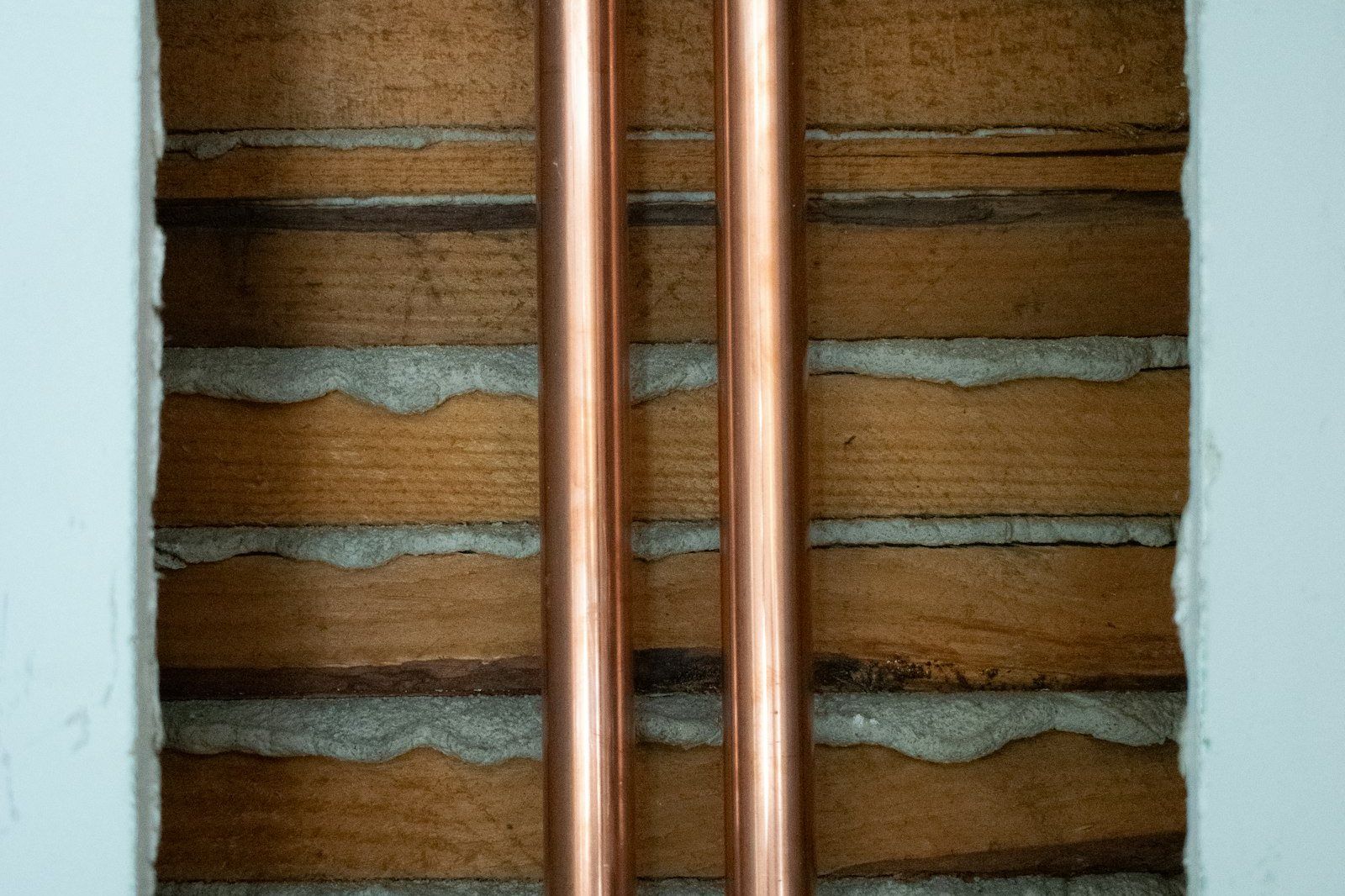
Shut off the water first
Find the main shutoff before you do anything else. In most Omaha houses it is in the basement where the water line comes in from the street, often near the meter. Turn it clockwise until it stops. Then open a faucet on the lowest floor to drain the pressure out of the lines.
If the pipe broke near the electrical panel or water is coming through a ceiling light, keep away from it and tell the crew when you call.
What the crew does after a pipe break
- Get standing water out of every floor it reached.
- Open ceilings and walls where water is trapped. Water from an upstairs break often sits on top of drywall ceilings and in wall cavities.
- Take moisture readings to map how far it spread.
- Remove materials that will not dry in place.
- Dry the framing, subfloor and contents with air movers and dehumidifiers.
The plumbing repair itself is usually done by a plumber. Many restoration companies work with one and can arrange it, or you can call your own.
Frozen pipes in Omaha winters
Omaha gets real cold snaps, with stretches of days when it does not get above freezing. Pipes in exterior walls, over crawlspaces, in unheated garages and along the sill plate in the basement are the ones that freeze. A frozen pipe often does not leak until it thaws, so the water shows up a day later, sometimes while everyone is at work.
Older houses in Midtown, Dundee, Benson and South Omaha are more exposed. Many have balloon framing, little insulation in the outside walls, and plumbing that runs along cold exterior walls. Newer homes in west Omaha have better insulation, but a hose bib left connected, a garage line or a bathroom over the garage can still freeze.
Pipes also fail without any help from the cold. Old galvanized lines corrode from the inside, and braided supply lines to toilets, sinks and washers wear out. Those breaks can happen in any season.